Wednesday, 22 March 2017

Chateau Amboise
Chateau Amboise is directly situated on the banks of the river Loire and in the ancient and beautiful town of Amboise. Acquired by the monarchy in the 15th century, Amboise was fortified and was a royal residence during the reign of King Charles VIII and King Francoise I in the late 15th and early 16th centuries. Charles died at the chateau in 1498 after an unfortunate accident, hitting his head on a door lintel, he never recovered! 

The chateau is also the final resting place of Leonardo Da Vinci who lived the latter part of his life in Amboise. Arriving in December 1515 he was artist to the court of King Francis I. He died here in 1519 and is buried in the Chapel St Hubert.

The chateau went through many architectural changes as it developed from fortress to Royal Palace, with Charles employing Italian architects and artisans to make this "the first Italianate palace in France".

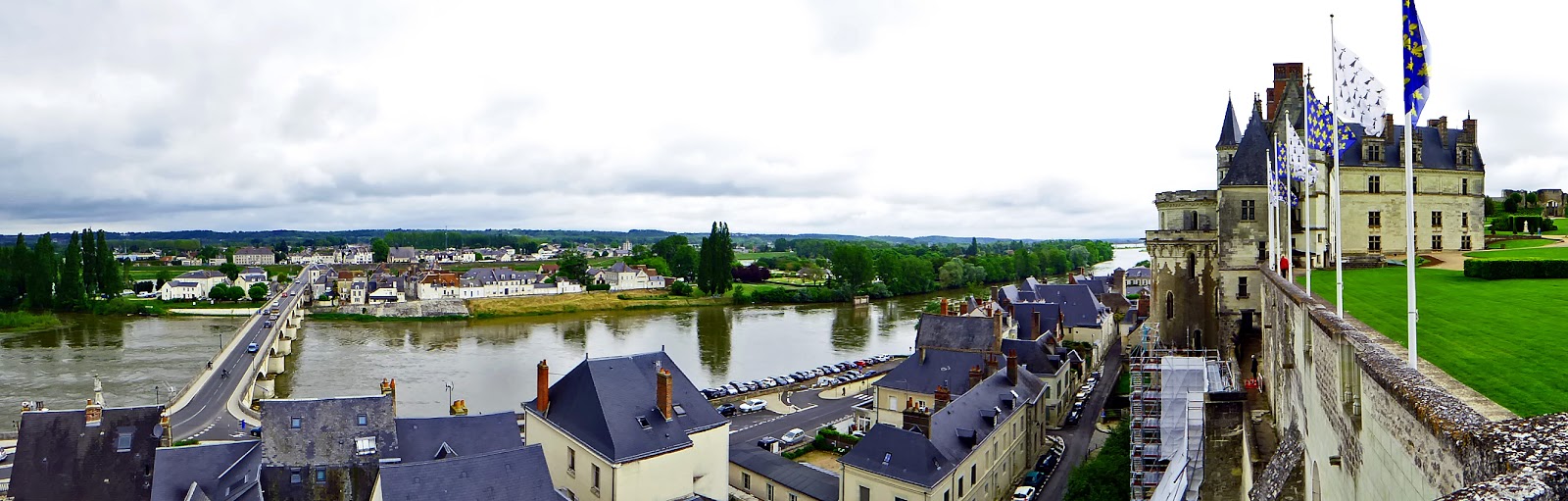
A walk around the ramparts provides great views of the town of Amboise and on it's northern side, the river Loire. Many of the apartments that are open to the public are furnished in different periods, making an interesting visit. Leonardo Da Vinci's remains are in the small chapel in the Chateau grounds. He had chosen to be buried in another part of the grounds and indeed was for a while, his body being later exhumed and re-buried in the chapel. A bust of the great artist now stands on a plinth at his original burial place.

 Views of the town from the ramparts of the chateau.


Amboise is a very pleasant town to spend some time.


A panoramic view of the river Loire from the chateau.


Looking upstream, over some very nice residences below the chateau.

The chateau, the town and the river.




The Chapel St Hubert, where Leonardo is buried.

Chapel St Hubert and some heavily pollarded plane trees.


Here lies Leonardo, artist and genius of the renaissance.


The chapel interior.


 The Royal Lodge, from the grounds.


Another view across the grounds.


Interesting and immaculate garden design. The box garden.


Parfait!


This bust of Leonardo stands on the original site of his burial.


Inside the chateau, a portrait of a young Francoise d'Angouléme, future King Francoise I.

The council chamber


Fireplace in the council chamber.


King Francoise and his Queen.


The Orléans Chambre. 


Chateaux of The Loire..... just for a complete change!

Chateau Chambord

One of the largest Chateau in the world, Chambord is a work of art in itself. Listed as a World Heritage site, it is everything you would imagine a chateau to be. It is placed in extensive grounds, the buildings are enormous and the style is grand opulence. The construction was started in the 1519  as a hunting lodge for King Francoise I, but was not completed in his reign. The sad thing is that in spite of the great wealth that was invested to build Chambord, it was never a permanent residence. The most it was used was in the 18th century when it was occupied for a total of just 12 years. It's very distinctive french Renaissance architecture and sheer size, make it one of the most recognisable of all the French chateaux.

Chambord has 440 rooms, 282 fireplaces and 84 staircases! One of the most striking architectural features is the double spiral staircase, attributed Leonardo Da Vinci. The two spirals ascend the three floors without ever meeting and are lit from top to bottom by a lighthouse configuration on the roof. The design is both beautiful and spectacular and although no evidence exists of who it's designer was, there can be no mistaking the genius of the hand behind it's creation.

 Views of the exterior of the chateau


One of four large towers.

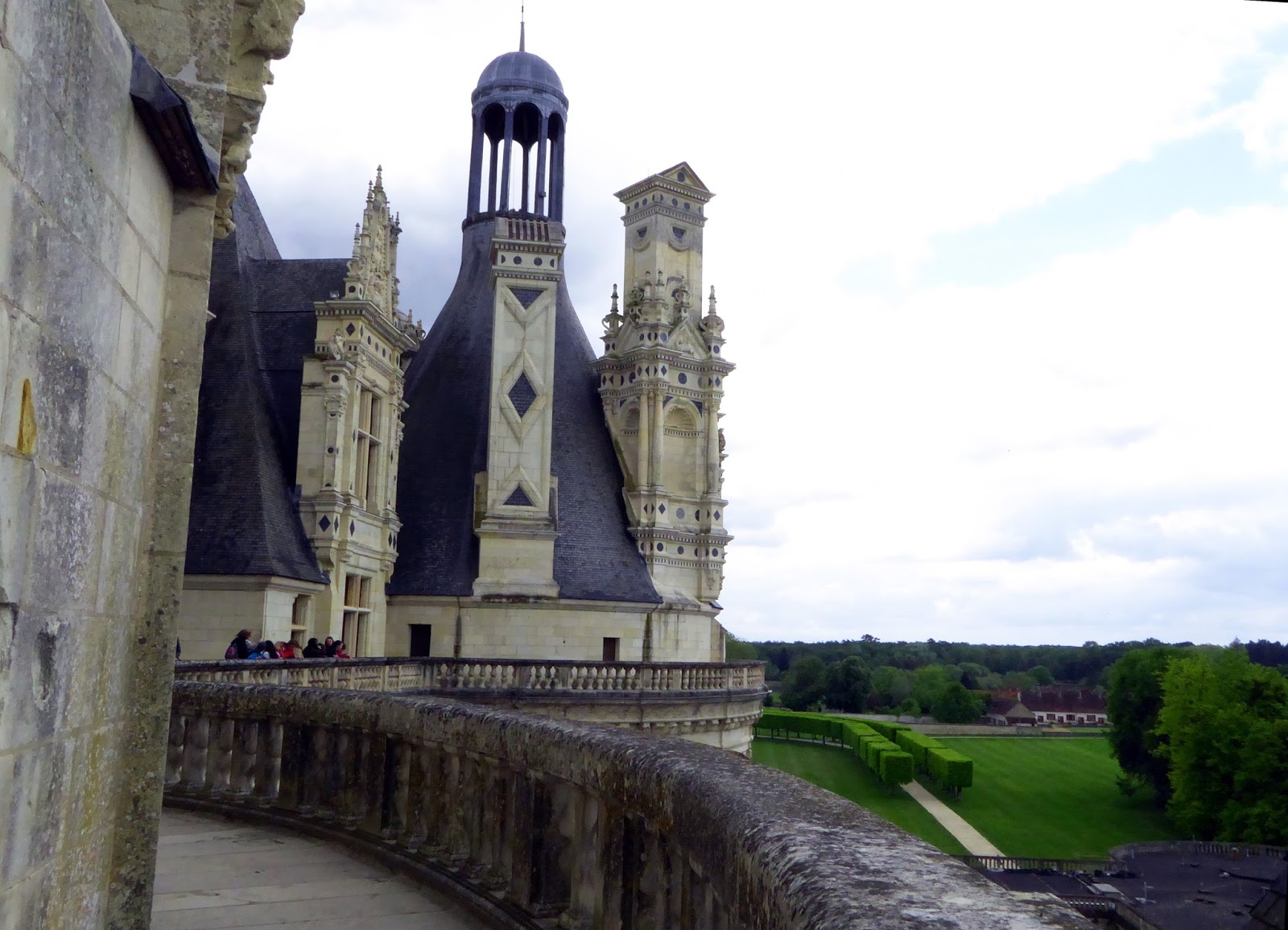
The rooftop gives a good vantage point for some of the most spectacular architecture.

Towers, chimneys and chapels, on the roof.


A view of one of the towers and the moat, from the roof. The moat was never designed to be defensive, only decorative.


Rooftop chapel


The view from the roof, down one of the driveways that lead to the chateau.

The double spiral staircase attributed to Leonardo Da Vinci.


This is an early, ceramic, central heating boiler!


Tuesday, 21 March 2017

More Signs of Spring.

The days are certainly getting longer and there are spells of warm sunshine in amongst the very wet and the very cold ones. But the spring flowers start to bloom all the same. On our latest walk around the environs of Coniston we counted fourteen different wild flowers in bloom. At this time of year the number seems to go up overtime we go out.

Here are a few of the ones we saw yesterday.

The woods don't look much like spring yet, but the flowers are definitely coming through.

The primrose. If snowdrops are an indication that spring is on it's way then the primrose is confirmation. It's always exciting to see the first one of the year.

Blackthorn, or Sloe. A beautifull blossom and a vicious thorn!

Opposite leaved golden saxifrage. A very small flower, but worth a close look.

A beautiful white violet, they always flower before the darker coloured ones.

Wild strawberry, with a promise of summer fruits to come.

Flowering recurrent, not a wild flower, a garden escapee, but I couldn't resist it.