Monday, 23 January 2017

Kandersteg Blog Part 5..... The flowers of the Spittelmatte

The Spittelmatte is a high mountain plateau, surrounded by even higher mountains. It has an incredible number of flowers, both in terms of species and quantity. To visit Spittelmatte on a glorious day in June is one of life's utmost pleasures. There can be very few days to compare with a day on the Spittelmatte.
Take the Sunbelt cablecar from Kandersteg, the same one as for the Gemmi Pass walk and within minutes you will be at six and a half thousand feet, almost unable to take in all the wondrous sights around you. We have found it best to have a day wandering around the Spittelmatte quite separate from the day we walk up to Gemmi Pass, otherwise you will never get to the pass. The distraction of the flowers prevents quick progress. So we allow ourselves the indulgence of a day just to enjoy the flora of this very special place.


The Kandersteg to Sunbuel cablecar holds up to 45 people.


Spittelmatte, an old summer pasture, high in the mountains.


Sometimes it is the profusion of a particular species that catches the eye.


Sometimes it's the mixture of species growing side by side.


And sometimes it's a bunch of gentians like this, that won't let you pass without photographing them.

 Oh, it's them gentians again! You've just got to photograph them!


Auricula, or Bear's Ear. Lots of them growing, again, quite close to the snow line.


Anemones, suffering a little from a damp day.


Globularis


Water Avens


Gentians and Primula Farinosa


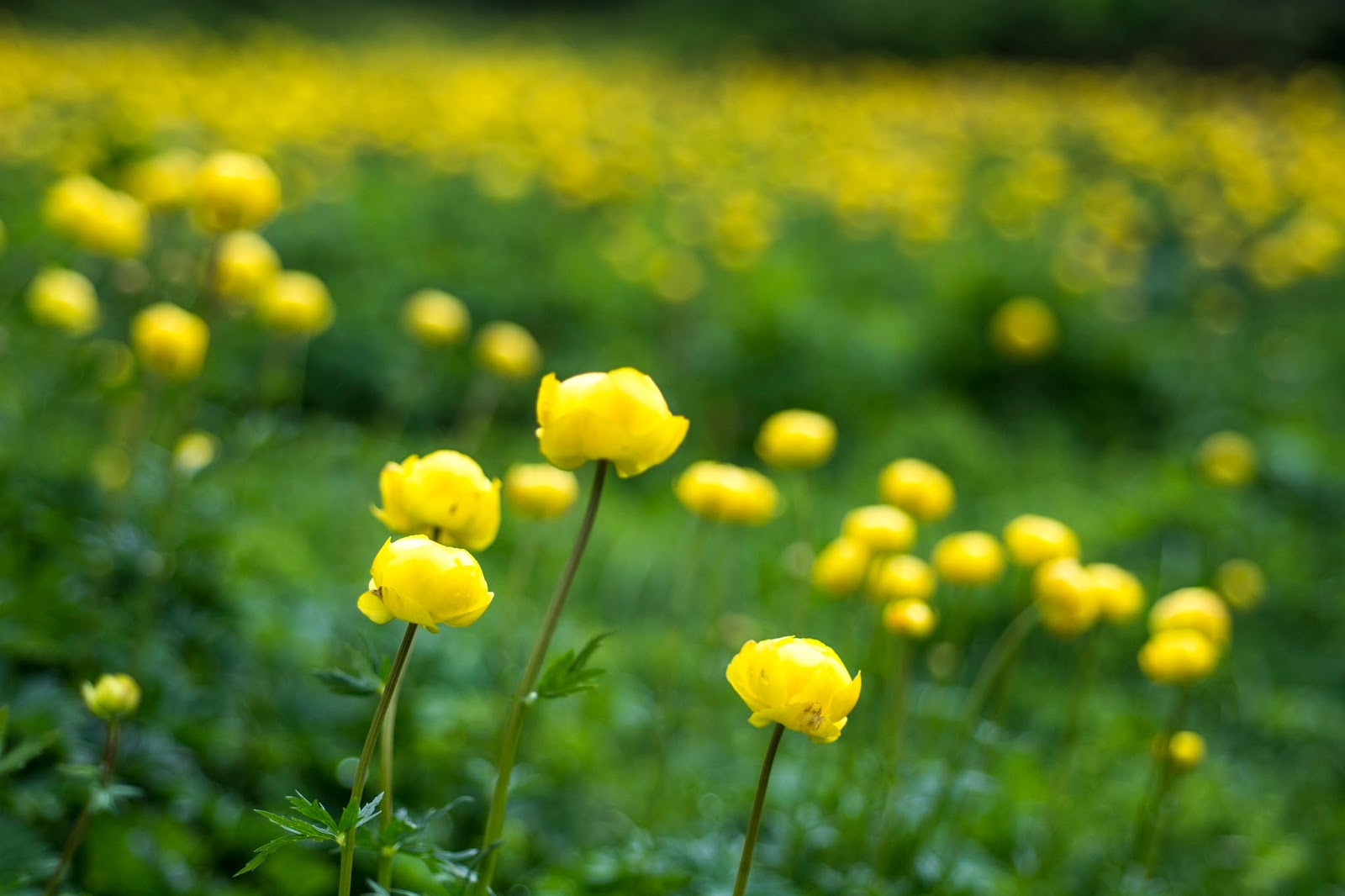
Globe Flowers


Time for a break. It can be hard work this flower photography!


Oxlip


Soldonella, can be found immediately where the snow has just melted, often on the edge of a receding patch of snow.


Oh, those gentians!


More Globe flowers, millions of them!


Pansy


At the southern end of the Spittelmatte there is a collection of small lakes. They are made up of melt water from the snows, so depending on the time of year and how much snow there was the previous winter there may be up to three of them and there may be none at all. They go under the collective name of Arvenseeli.


Globe flowers.... again.


Verticillate Lousewort


It would be a lot easier if these flowers didn't grow so low down.


More of Arvenseeli


Bird's Eye Primrose, or Primula Farinosa


I had to finish with this portrait of a trumpet gentian... I love 'em!

Sunday, 22 January 2017

January

The question everyone is asking (apart from 'how the hell did Trump get to be president?) is what's happening to the weather? Is anything happening to the weather? We often get snow here in January, but I also think that quite often we don't. Is a mild January that exceptional? Or do we just remember the cold snowy ones? Without doubt the climate is changing and the world is warming up, 2016 being the warmest year on record. But the confusion arises when we confuse climate with weather and what we should really be asking is "what effect is a warmer climate having on our weather" because it doesn't necessarily mean warmer, drier weather for everyone. Our weather naturally varies from year to year and the trend of a warmer climate will impact on that. But I am no nearer knowing how, or when. So, January has been generally mild, misty and dark, but I bet it's not the first time that has happened.


A day thay is typical of this January, dark, misty and still. This is the lower end of the Coppermines Valley, Coniston, showing the ravine of Church Beck.

Thursday, 19 January 2017

Kandersteg blog Part 4..... The Grosser Aletsch Gletscher

We took the train out of the valley for today's adventure. Heading south through the Lotschberg tunnel we got to the town of Brig, where we changed trains to take us up the Rhone valley to Betten F.O. From ther it was a cablecar ride up the mountain to Betmeralp where we had intended to walk up to a point where we could view the largest glacier in The Alps. Unfortunately the weather didn't look too good, so we walked to the top of the village and took yet another cablecar up to the viewpoint.


It was the right decision for us as the weather was very misty and we didn't fancy navigating in the mist. However it didn't look too promising for seeing the glacier either. This feeling that we might have chosen the wrong day was enhanced as we left the cablecar and it started to snow!


As if there wasn't enough snow already. Just to remind you, it was the 20th of June!


Not much sign of the glacier, so all we could do was take a seat, have lunch and wait.


And as we waited, something began to happen. The clouds parted briefly and a little bit of blue sky and sunshine appeared.


The glacier came into view.


A truly amazing sight, with amazing statistics to go with it.


At it's source on the Concordia platz the ice is 900 meters thick. It is 22.6 kilometers long and it covers an area of 86 square kilometers.


This plaque is attached to the rocks overlooking the glacier. I love the sentiment behind it.


And as befits such a special place, special flowers. 


Primula hirsiutum


Gentians


Pasque flower. It doesn't appear to be enjoying the cool damp weather.


Back down to Betmeralp and a look around the lake to see if we could spot any different wild flowers. Here are some of what we found.


Alpenrose


Fragrant orchid


Trumpet gentian


Mountain pansies and geum.


Elderflower orchid


Betmeralp


Back through the streets of Betmeralp to the cablecar station, which will take us down to the train in the Rhone valley. Oh the wonders of the intergrated, Swiss transport system. They make it look so easy!